For first responders, the “office” is often a scene of chaos, crisis, and high-stakes decision-making. Whether you are in law enforcement, fire services, or emergency medical services, your brain is conditioned to perform under extreme pressure. While this resilience is a professional necessity, the cumulative weight of what you see and experience can lead to a specific type of psychological burden.
Traditional “talk therapy” often feels inadequate for those who have spent a career witnessing trauma. You may find it difficult to articulate the sensory overload of a scene, or you might feel that rehashing the details only makes the memories more vivid. This is where Eye Movement Desensitization and Reprocessing (EMDR) offers a fundamentally different path to healing.
At Triad Psych, we specialize in providing evidence-based mental health services tailored to the unique culture of public safety. EMDR is not just another therapeutic modality; it is a neurobiological tool designed to help you process trauma without the need for exhaustive verbal descriptions.
What is EMDR and How Does it Work?
EMDR is a structured therapy that encourages the patient to briefly focus on the trauma memory while simultaneously experiencing bilateral stimulation (typically eye movements). This process is as sociated with a reduction in the vividness and emotional charge associated with the traumatic memo ries.
Unlike traditional therapy, which focuses on changing your thoughts or behaviors, EMDR targets the way your brain stores the memory. When a traumatic event occurs, the brain’s natural processing sys tem can become overwhelmed, causing the memory to be “stuck” in its original, raw, and distressing form. This is why a sound, smell, or image years later can trigger the same physiological “fight or flight” response as the original event.
The Neurobiology of EMDR
EMDR functions similarly to the biological processes that occur during REM (Rapid Eye Movement) sleep. During REM, your brain processes the day’s events and moves them into long-term storage. EMDR replicates this through bilateral stimulation, allowing the brain to “digest” the stuck trauma.
For a first responder, this means you can take a high-stress memory, like a difficult call or a line-of duty injury, and move it from a “live” threat to a historical fact. You don’t forget the event, but the physiological sting and the hypervigilance associated with it begin to fade.
Why EMDR is Specially Suited for First Responders
The culture of public safety often prioritizes stoicism. Many responders hesitate to seek help because they don’t want to “open a can of worms” or they feel that no civilian could understand the nature of their work. EMDR addresses these barriers directly:
- Limited Verbal Requirements: You do not have to spend hours describing every detail of a traumatic event. EMDR allows your brain to do the heavy lifting internally.
- Efficiency: For single-incident traumas, EMDR can often produce significant results faster than traditional talk therapy.
- Direct Symptom Targeting: It specifically addresses the “re-experiencing” symptoms of PTSD, such as flashbacks, nightmares, and intrusive thoughts.
- Professional Longevity: By processing trauma as it happens, you can reduce the cumulative “burnout” that often leads to early retirement or personal relationship strain.
We understand that for law enforcement, the transition from a high-alert shift to a home environment is difficult. Our Advanced Psychology for Cops resources highlight how specialized training and therapy can bridge this gap.
Addressing Moral Injury and Hypervigilance
First responders frequently deal with more than just physical danger; they deal with “moral injury.” This occurs when you witness or participate in events that transgress your deeply held moral beliefs. It often manifests as intense guilt, shame, or a sense of betrayal by the “system.”
EMDR helps by allowing you to process these complex emotions and replace negative self-beliefs (e.g., “I should have done more”) with more adaptive, realistic ones (e.g., “I did what was possible given the circumstances”).
Furthermore, the “hypervigilance” that keeps you safe on the street can be exhausting when it won’t turn off at home. EMDR helps recalibrate your nervous system, teaching your brain that the immediate threat is over, allowing for better sleep and more presence with your family.

What to Expect in an EMDR Session
At Triad Psych, we prioritize a structured, professional, and transparent approach. You will never be pushed to process a memory before you are ready. The process generally follows eight phases:
- History-Taking and Treatment Planning: Identifying the specific targets for EMDR. 2. Preparation: Learning specific techniques to manage stress and “ground” yourself during and between sessions.
- Assessment: Identifying the specific image, negative belief, and physical sensation associated with the memory.
- Desensitization: This is the core of EMDR, using bilateral stimulation to process the memory. 5. Installation: Strengthening positive beliefs to replace the old, negative ones. 6. Body Scan: Ensuring all physical tension associated with the memory is gone. 7. Closure: Returning to a state of equilibrium at the end of the session.
- Re-evaluation: Reviewing progress at the start of the next session.
Our clinicians, including experts like John Prucha, are experienced in creating a safe environment where you can work through these phases at a pace that feels controlled and respectful of your experiences.

Creating a Safe Environment for Healing
We recognize that for a first responder, privacy and professional competence are paramount. You need to know that your therapist isn’t going to be “shocked” by what you’ve seen and that they understand the logistics of your job, from rotating shifts to the chain of command.
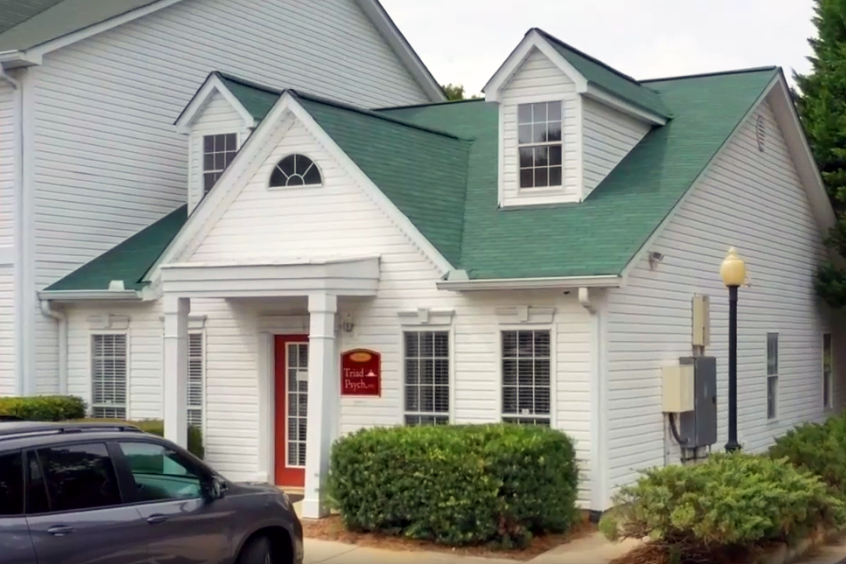
Triad Psych is committed to providing a professional, clinical setting that respects the dignity of our clients. Our facilities are designed to be calming and uncluttered, providing a neutral space where you can focus on your recovery without external distractions.
Whether you are seeking support in the Atlanta area or are looking for specialized evaluations, our team is equipped to handle the complexities of public safety and mental health. We provide everything from individual therapy to DUI evaluations and specialized expert testimony.
Conclusion: Reclaiming Your Life After Trauma
Trauma does not have to be a permanent weight that you carry. While your experiences have shaped you, they do not have to define your future or dictate your mental health. EMDR offers a scientifically validated, efficient, and respectful way to process the past so you can be fully present in your life today.
If you are ready to explore how EMDR can help you or your team, we invite you to reach out. At Triad Psych, we are honored to serve those who serve our communities.
Contact Triad Psych
For more information or to schedule an initial consultation, please visit our website or contact our office directly. We offer services across the Atlanta and Charlotte regions, providing a safe, supportive environment for healing and growth.